The Legislative Branch: Making Laws and Deciding Spending
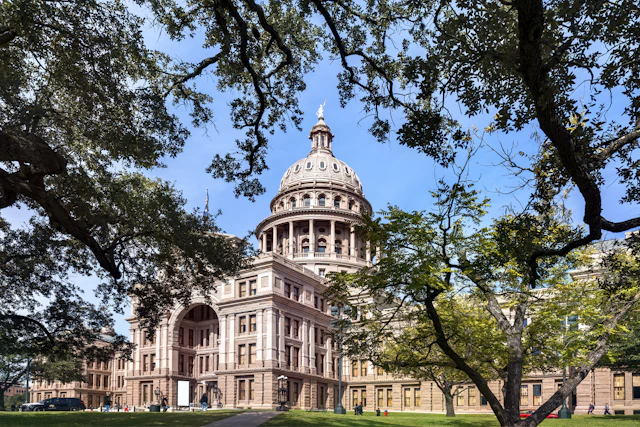
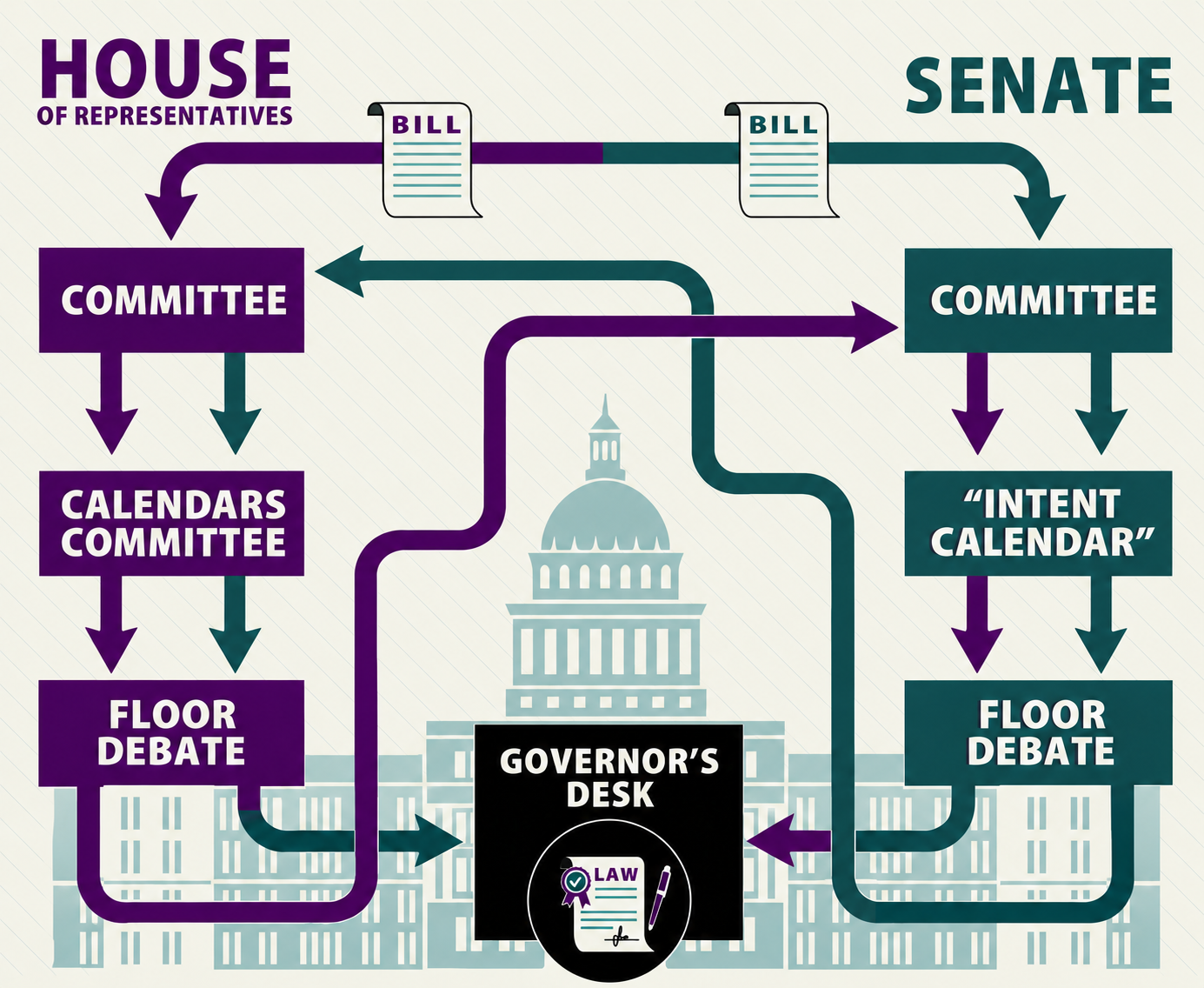
The Texas Legislature makes state laws, approves the state budget, and oversees state agencies. It has two parts, called chambers:
- The House of Representatives has 150 members. Voters elect representatives to two-year terms.
- The Senate has 31 members. Voters elect senators to four-year terms.
Texas is divided into House and Senate districts. Each district elects a lawmaker to represent the people who live there.
House members choose one of their members to serve as speaker of the House. The lieutenant governor, elected by voters across Texas, leads the Senate. These leaders help organize their chamber’s work and shape which bills move forward.
The Executive Branch: Carrying Out Laws
The executive branch carries out state laws and runs state programs and services.
The governor is elected to a four-year term. The governor can sign or veto bills, call special sessions, and appoint people to many state boards and offices. These appointments can influence how agencies are led and what they prioritize.
Executive power is shared with other statewide officials, many of whom are elected separately. The lieutenant governor is part of the executive branch and also leads the Texas Senate as its president.
State agencies run programs, provide services, and enforce the laws they oversee. State law sets what each agency can do.
When an agency has the power to write rules, those rules explain how it will carry out the law. The agency usually publishes the proposed rule, asks for public comments, and reviews them before deciding whether to adopt the rule.
Agencies also set policies for their daily work. The process for changing a policy can differ from the process for changing a formal rule.
The Judicial Branch: Deciding Cases and Interpreting Laws
The judicial branch is the court system. Courts decide legal disputes and determine how laws apply.
Trial courts hear cases, consider evidence, and issue decisions. Appeals courts review decisions from lower courts to determine whether the law and court procedures were followed.
Texas has two highest state courts:
- The Supreme Court of Texas handles final state appeals in most civil and juvenile cases.
- The Texas Court of Criminal Appeals handles final state appeals in criminal cases.
Court decisions can affect how laws are understood and applied. Many Texas judges are elected by voters.